




Cart 0

How to Choose the Right Forklift Attachment
Standard forks are suitable for many everyday lifting and warehouse tasks, but they cannot safely handle every type of load. The right forklift attachment can make it easier to lift long, awkward or non-palletised items, collect waste, clear metal debris or provide temporary access for approved work at height.
There are many types of forklift attachments, including tipping skips, access platforms, fork-mounted jibs, magnets and fork extensions. Each attachment changes how the truck handles a load, so it must be compatible with the forklift, its forks and its rated capacity.
This guide explains how common and specialist forklift attachments work, what they are used for and what to check before choosing one for your application.
Types of forklift attachments covered in this guide
- Folding access platforms
- Tipping skips
- Fork-mounted jib attachments
- Fork-mounted magnets
- Fork extensions
- Forklift picking attachments
- Specialist attachments for unusual loads
Folding access platforms for forklifts

A folding access platform is designed to provide temporary access for appropriate work at height, such as inspection or maintenance tasks. It can be fitted to compatible forklift forks and folded down for compact storage when it is not in use.
Before using this type of forklift attachment, confirm that the platform and truck are compatible and that the work can be carried out in accordance with the manufacturer’s instructions, site procedures and relevant work-at-height requirements. The forklift’s maximum lift height alone does not determine whether the platform is suitable.
Tipping skip forklift attachments
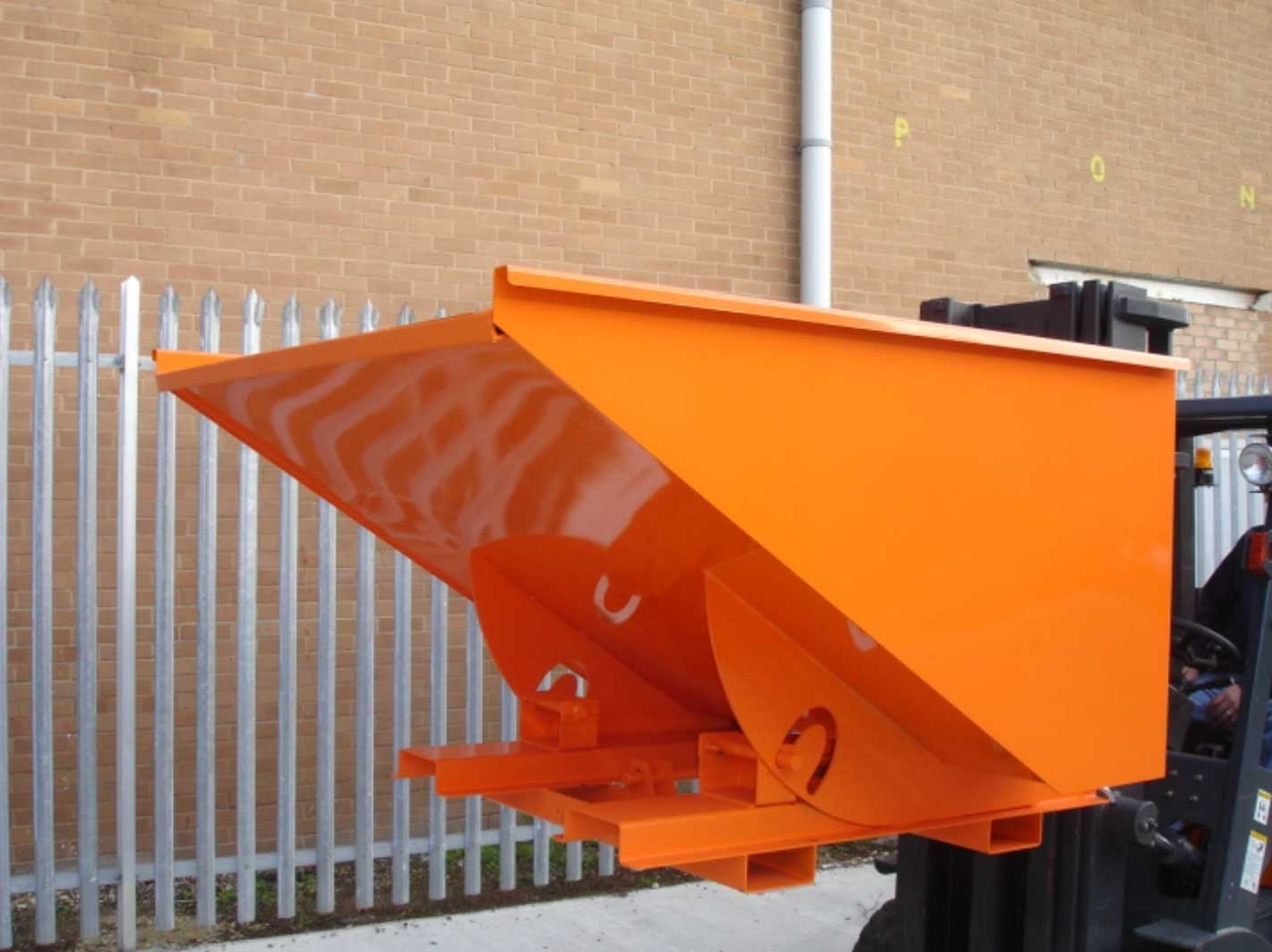
A tipping skip can help collect, move and empty waste or loose materials around warehouses, factories, yards and construction sites. These forklift fork attachments slide onto the forks and are secured in place before use.
Depending on the model, the tipping mechanism may be operated manually or automatically when the skip reaches the discharge point. Choosing the correct skip can reduce manual material handling and make routine waste management more efficient. Check its capacity, dimensions, tipping mechanism and compatibility with the forklift before use.
Jib attachments for forklifts:

Jib attachments for forklifts convert a compatible truck into a lifting solution for suitable loads that cannot be handled on a pallet but can be secured to an approved lifting point. Typical applications include moving long, awkward or suspended loads using an appropriate hook and lifting accessory.
Fixed and adjustable jibs are available, with different lengths, hook positions and rated capacities. Because the load is carried farther from the forklift, a jib can reduce the truck’s available lifting capacity and change its load centre. Always check the attachment rating, forklift capacity and approved configuration before lifting.
Fork-mounted magnet attachments
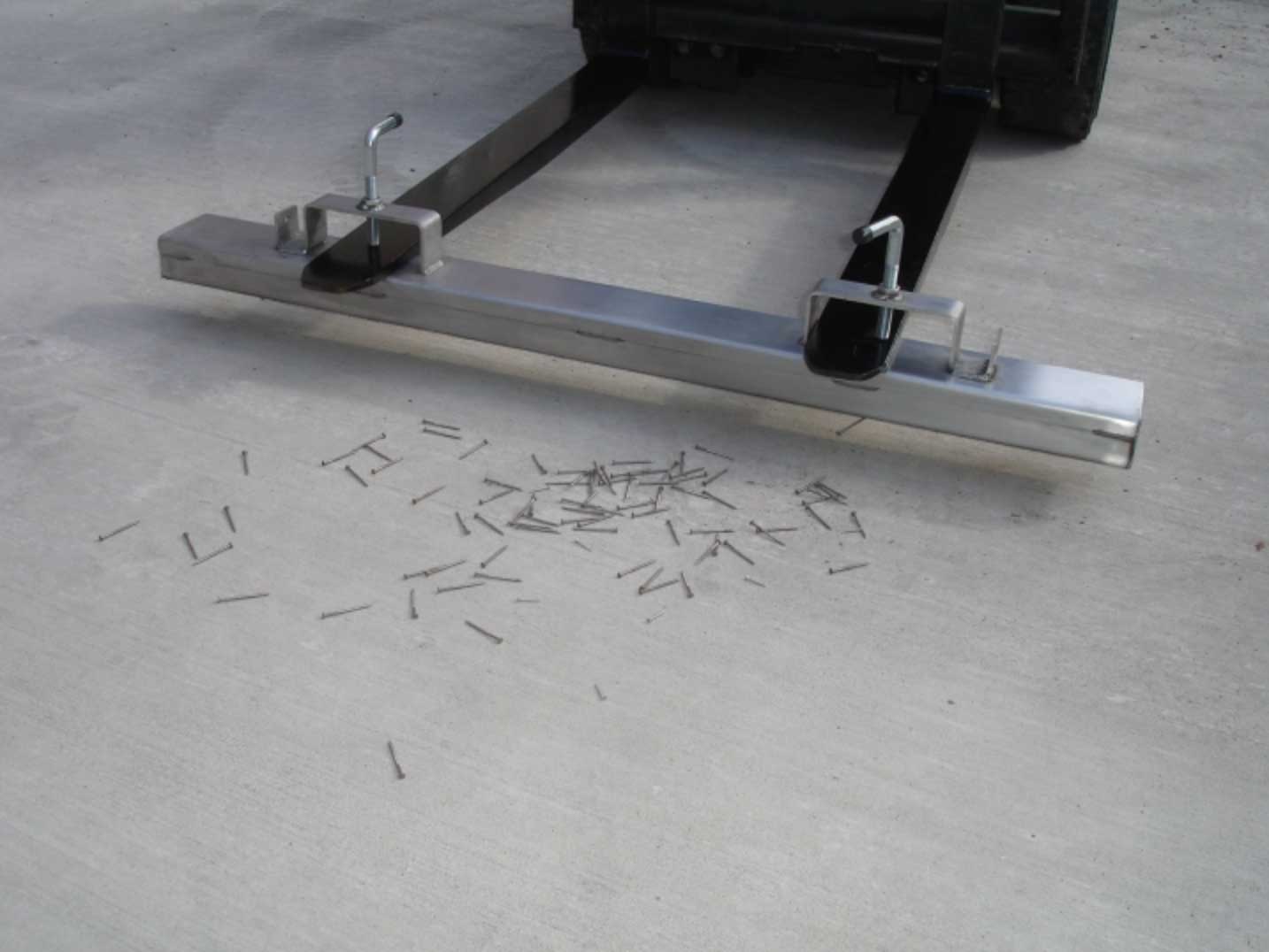
A fork-mounted magnet provides a practical way to collect ferrous metal from factory floors, warehouses, car parks and goods yards. It can help remove steel offcuts, nails and other magnetic debris that could damage tyres, obstruct working areas or create a site hazard.
This specialist forklift attachment is particularly useful in manufacturing, construction, recycling and waste-management environments. Check the magnet’s working width, collection capacity and method of releasing collected material before choosing a model.
Fork extensions and other forklift fork attachments
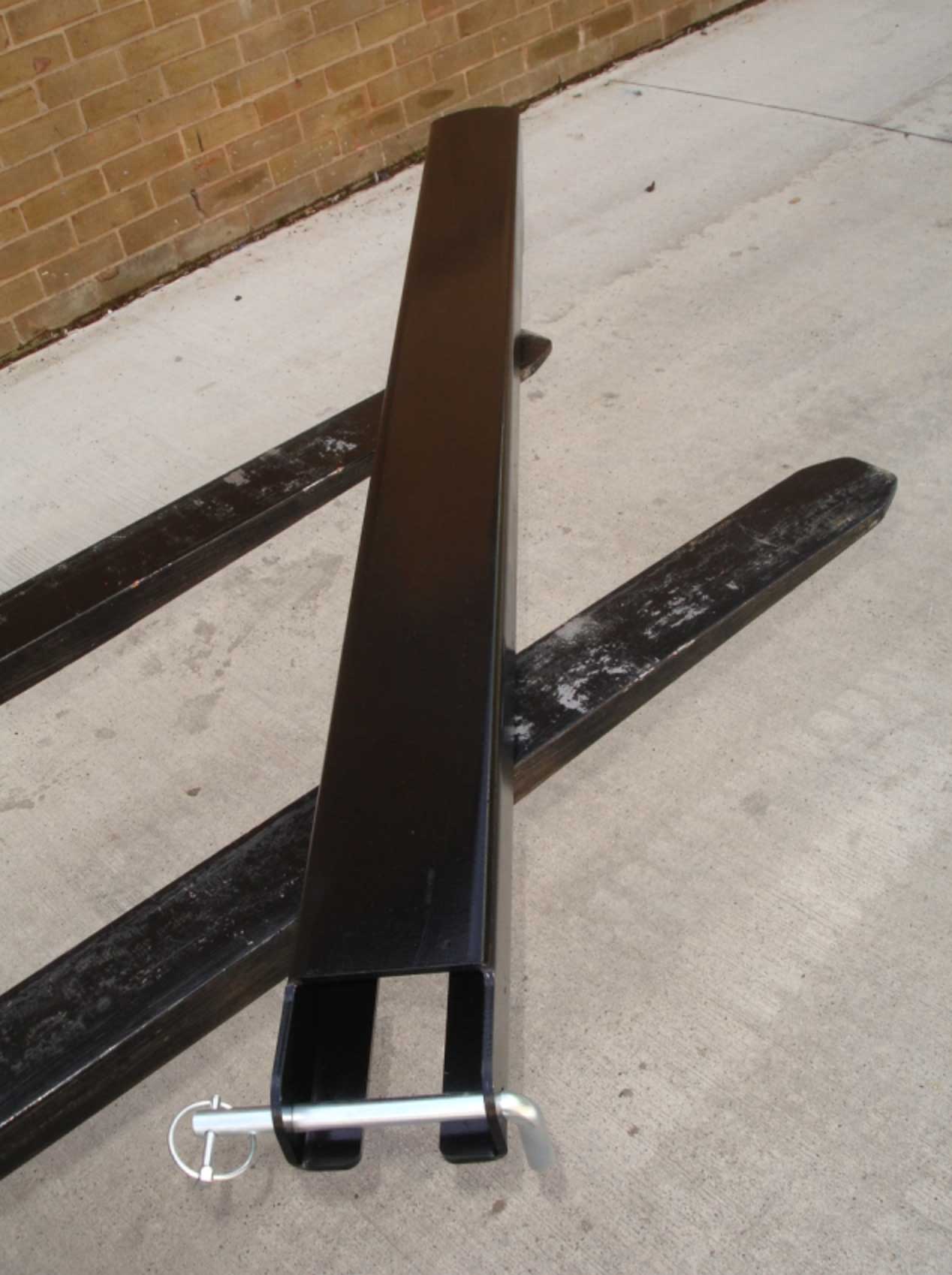
Fork extensions fit over the forklift’s existing forks to provide additional support for longer or awkward loads. They may be suitable for handling long pallets, crates and other loads that cannot be adequately supported by standard forks.
Fork extensions must match the width, thickness and length of the existing forks and be suitable for the intended load. If the existing forks are worn or damaged, fit replacement forklift forks before adding an extension. They do not increase the forklift’s rated capacity, and extending the load forwards can reduce the capacity available at the new load centre. Check the manufacturer’s instructions and the truck’s capacity before use.
Other forklift fork attachments include drum handlers, carpet poles, load backrests, fork positioners and clamps. The right option depends on the material being handled and whether it needs to be supported, gripped, rotated or suspended.
Forklift picking attachments
Forklift picking attachments are designed to support specific order-picking and materials-handling tasks. Depending on the operation, these may include approved work platforms, fork-mounted trays, load supports or specialist handling equipment.
The correct solution depends on what is being picked, the height involved, the aisle width and the type of forklift being used. Equipment intended to lift goods should not automatically be assumed suitable for lifting people. Any personnel platform must be specifically designed, approved and used for that purpose.
When are specialist forklift attachments needed?
Specialist forklift attachments are useful when standard forks cannot safely support, grip or control the load. Examples include:
- Drum handlers for lifting and rotating drums
- Bale clamps for handling compressed materials
- Rotators for tipping or inverting loads
- Carpet poles for long cylindrical products
- Fork positioners for adjusting fork spacing hydraulically
- Clamps for cartons, appliances or other non-palletised goods
A forklift with attachments can perform a wider range of tasks, but each attachment affects the truck’s weight, load centre, visibility and available capacity. The forklift should be assessed in its complete working configuration rather than treating the attachment as a separate accessory.
How to choose the right attachment for your forklift
Before selecting an attachment for a forklift, establish exactly what the truck needs to lift and how the load will be handled. The following checks will help narrow down the options:
- Load type: Identify its shape, dimensions, weight and centre of gravity.
- Forklift compatibility: Check the truck model, fork dimensions, carriage class and hydraulic requirements.
- Attachment capacity: Confirm that the attachment is rated for the intended load.
- Residual capacity: Find out how the attachment’s weight and load centre affect the truck’s available lifting capacity.
- Working environment: Consider aisle width, lift height, floor conditions, visibility and indoor or outdoor use.
- Frequency of use: Decide whether a removable fork-mounted option or a permanently fitted hydraulic attachment is more appropriate.
- Operator requirements: Ensure operators are trained and familiar with the attachment and the revised truck configuration.
Never choose an attachment based only on whether it physically fits the forks. Compatibility, capacity and the way the attachment changes the forklift’s handling characteristics must all be considered.
Speak to CAM about forklift attachments
Choosing a forklift attachment involves more than finding one that fits the forks. The attachment, truck and load must work together as a compatible handling system.
CAM supplies forklift fork attachments, jib attachments, fork extensions and other specialist forklift attachments for a wide range of applications. If the equipment you need is not listed, call 0114 243 3332 or contact our team. We can help you compare the available options and identify an attachment suited to your forklift and handling requirements.
Forklift attachment FAQs
What are the main types of forklift attachments?
Common types of forklift attachments include fork extensions, tipping skips, jib attachments, access platforms, fork positioners, clamps, rotators, drum handlers and magnets. The correct type depends on the load and the task being carried out.
Do forklift attachments reduce lifting capacity?
Many attachments add weight and move the load centre forwards, which can reduce the forklift’s available lifting capacity. The residual capacity should be confirmed for the truck and attachment combination before use.
Can any attachment fit any forklift?
No. An attachment must be compatible with the forklift’s forks or carriage, rated capacity and, where applicable, hydraulic system. Its dimensions and securing method must also be checked.
What are forklift fork attachments?
Forklift fork attachments fit onto or over the truck’s existing forks. Examples include fork extensions, tipping skips, access platforms, magnets and some jib attachments.
What are jib attachments for forklifts used for?
Jib attachments enable a suitable forklift to handle certain suspended, long or awkward loads using an approved hook and lifting accessories. Capacity and load-centre changes must be checked before use.
Which forklift picking attachment do I need?
The right picking attachment depends on the goods, picking height, aisle width, forklift type and whether the equipment will lift goods or people. A supplier should confirm compatibility and suitability for the specific task.
Subscribe to our latest newsletter
Subscribe now to receive the latest offers, stock updates, exclusive product releases, and company news directly to your inbox.