




Cart 0
Published on:
Published in:
Advice & Information
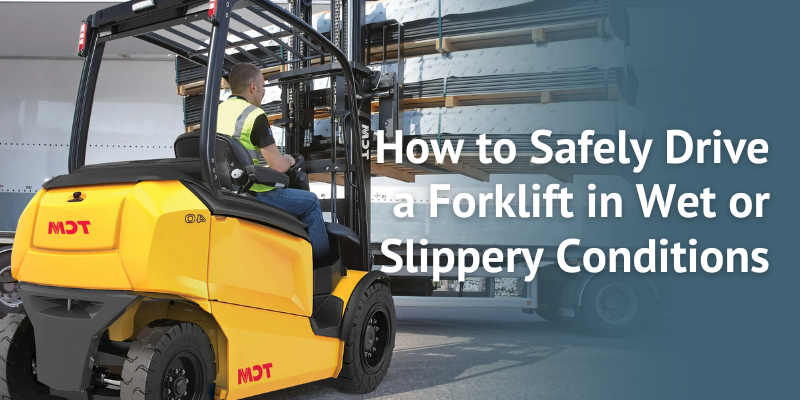
How to Safely Drive a Forklift in Wet or Slippery Conditions
Wet weather can create additional risks for forklift operators, particularly when working outdoors or moving between indoor and external areas. Rain, snow, ice and standing water can all affect traction, visibility and stopping distances, making safe operation more challenging.
Whether you’re working in a busy yard, loading area or warehouse environment, understanding the risks of driving a forklift in wet conditions can help reduce the likelihood of accidents and keep both operators and those working nearby safe.
The Dangers of Operating Forklifts in Wet Weather
Wet and slippery surfaces can significantly affect the way a forklift handles. Reduced traction can make it easier for tyres to lose grip, particularly when turning, braking or carrying a load.
Stopping distances may also increase on wet surfaces, meaning operators need to allow more time and space to slow down safely. Sudden braking, sharp turns or rapid acceleration can increase the risk of skidding or losing control.
Standing water can create further hazards by concealing potholes, uneven ground or other surface defects. In colder weather, water may also freeze and create icy patches that are particularly difficult to spot.
Wet conditions can also affect pedestrians and other vehicles operating nearby. Slippery surfaces increase the importance of maintaining safe distances and ensuring everyone on site is aware of changing conditions.
Best Practices for Safe Operation in Rain and Snow
When operating a forklift in poor weather, operators should adapt their driving style to suit the conditions.
Reducing speed is one of the most important steps. Travelling more slowly gives the operator greater control and provides additional time to react to hazards. Extra space should also be left between the forklift and other vehicles, pedestrians and obstacles.
Avoid sudden movements wherever possible. Accelerate, brake and turn gradually to help maintain traction and stability. Sharp turns should be avoided, particularly when carrying a load.
Operators should also take extra care when travelling across changes in surface conditions. Moving from a dry warehouse floor to a wet yard, for example, can result in an immediate reduction in tyre grip.
Before starting work, routes should be checked for standing water, ice, snow or other hazards. Where possible, unsafe areas should be cleared, treated or avoided until conditions improve.
Tyre Maintenance and Equipment Adjustments
Tyres play an important role in maintaining safe traction, particularly when driving a forklift in wet conditions. Worn or damaged tyres may provide less grip and can increase the risk of skidding.
Forklift tyres should be inspected regularly for wear, damage and general condition. The correct type of tyre will depend on the forklift, the working environment and the surfaces it regularly operates on.
Pneumatic tyres can be particularly well suited to uneven outdoor surfaces, while other tyre types may be more appropriate for smooth indoor environments. It is important to choose tyres based on the specific application and manufacturer’s recommendations.
Operators should also complete their usual pre-use checks, paying particular attention to brakes, steering, lights and other safety features. Any faults should be reported and addressed before the forklift is used.
Operator Visibility and PPE Recommendations
Poor visibility is a major concern when operating forklifts in rain, snow or other adverse weather conditions. Rain, spray and low light levels can make it more difficult to see pedestrians, vehicles and potential hazards.
Operators should ensure windows, mirrors and lights are clean and in good working order, checking any fitted visibility aids, such as windscreen wipers and demisters, before use. Appropriate PPE, including waterproof clothing, high-visibility garments and footwear with good slip resistance, can also help operators remain comfortable and visible when working outdoors.
Clear communication is equally important. Operators should use lights, warning devices and other appropriate safety measures to make their presence known to others on site.
If your forklift is regularly used outdoors, a cabin upgrade could provide additional protection from the elements. Depending on the truck and its application, CAM can retrofit full or partial cabins, with options including windscreens and wipers to improve operator comfort and visibility in wet weather. Contact the CAM Fork Lift Trucks sales team to discuss the options available for your equipment.
Prepare Your Forklift for Changing Weather Conditions
As the weather turns and wetter, colder conditions become more common, now is a good time to make sure your forklift fleet is ready for the months ahead.
A winter health check can help identify potential issues before they affect performance, reliability or safety. From tyres and brakes to lights, visibility and general equipment condition, preventative checks can help keep your trucks operating safely throughout the season.
Contact CAM Fork Lift Trucks to book a winter health check and help ensure your forklift fleet is prepared for whatever the weather brings.
Frequently Asked Questions
Is it safe to drive a forklift in the rain?
It can be safe to operate a forklift in the rain provided the forklift is suitable for the environment and appropriate precautions are taken. Operators should assess the conditions, reduce their speed and ensure visibility and traction are sufficient for safe operation. If conditions become unsafe, work should be postponed until they improve.
How do wet conditions affect forklift traction?
Water can reduce the grip between forklift tyres and the surface, increasing the risk of skidding or losing control. Wet conditions can also increase stopping distances and make turning more difficult, particularly if movements are sudden.
What tyres are best for wet or slippery conditions?
The most suitable tyres depend on the forklift, working environment and surface conditions. Tyres should always be selected based on the manufacturer’s recommendations and the intended application. Regular inspection and maintenance are also essential to ensure tyres continue to provide effective grip.
Should forklift speeds be reduced in wet weather?
Yes. Forklift speeds should be reduced when surfaces are wet or slippery. Travelling more slowly gives operators more time to react and helps reduce the risk of skidding, particularly when braking or turning.
How can you improve forklift visibility in poor weather?
Keep windscreens, windows, mirrors and lights clean and in good working order. Use appropriate lighting and visibility aids, and ensure operators have suitable PPE for the conditions. Where visibility is significantly reduced, additional precautions should be taken or work postponed if it cannot be carried out safely.
Subscribe to our latest newsletter
Subscribe now to receive the latest offers, stock updates, exclusive product releases, and company news directly to your inbox.