




Cart 0
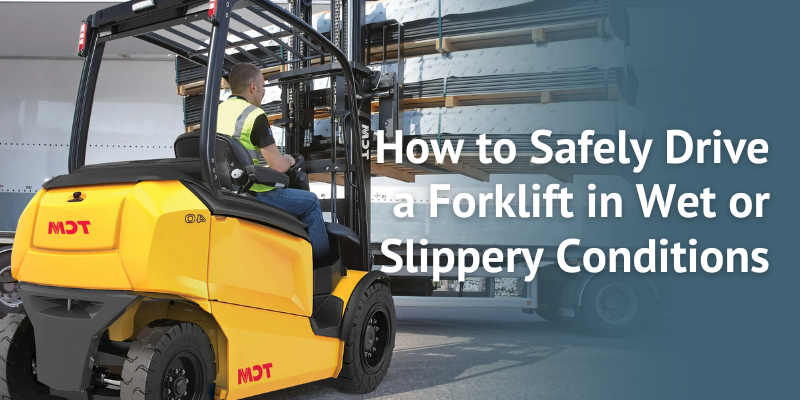
How to Safely Drive a Forklift in Wet or Slippery Conditions
Published on:
Published in:
News
Operating a forklift involves inherent risks, which can significantly increase when rain, snow, or moisture affects the ground. Wet or slippery surfaces reduce traction, limit visibility, and compromise load stability. Knowing how to operate a forklift safely in these conditions is essential to maintain workplace safety and prevent costly accidents.
The Dangers of Operating Forklifts in Wet Weather
Wet weather impacts a forklift’s performance in several ways. Reduced friction between tyres and the ground makes control more difficult, especially during turning, braking, or carrying heavy loads. Puddles can conceal hazards such as potholes, oil spills, or loose materials, increasing the risk of tipping or skidding.
Rain and snow also impair visibility. Operators may find it difficult to see pedestrians, obstacles, or uneven ground. Cold conditions can stiffen hydraulic systems or cause condensation on controls and windows. All these factors raise the likelihood of accidents if safe procedures are not followed.
Best Practices for Safe Operation in Rain and Snow
When weather conditions become hazardous, operators need to adjust their driving techniques to stay safe. Some of the most effective practices include:
- Reduce Speed and Increase Stopping Distance
Slippery surfaces require slower, more controlled movements. Always brake early and turn gradually to avoid spinning or tipping.
- Use Covered or Indoor Routes When Possible
Whenever your site allows, select sheltered paths to lessen exposure to rain or snow.
- Avoid Sudden Movements
Quick acceleration, sharp turns, or abrupt lifting can destabilise the forklift and load.
- Check Ground Conditions Frequently
Report and steer clear of icy patches, mud, pooled water, or oil spills.
- Use Proper Load Handling Techniques
Keep loads low to the ground, ensure proper weight distribution, and never exceed load capacity.
Tyre Maintenance and Equipment Adjustments
Tyres significantly influence forklift performance in wet conditions. Proper tyre care and equipment adjustments can greatly reduce slipping risks.
- Choose Appropriate Tyres
- Pneumatic tyres offer better traction on outdoor surfaces, especially when wet.
- Treaded tyres provide more grip than smooth tyres on slippery ground.
- Non-marking tyres can be more slippery when wet, so use with caution in moist environments.
- Maintain Correct Tyre Pressure
Under-inflated or worn tyres decrease traction and make braking more difficult. Regular inspections are vital.
- Inspect Brakes and Steering Systems
Wet weather can exacerbate minor mechanical issues. Ensuring responsive steering and braking reduces accident risks.
- Adjust Forklift Attachments
If using attachments such as clamps, rotators, or extensions, ensure they are secured and functioning correctly. Attachments can alter weight distribution, making stability even more critical on slippery surfaces.
Operator Visibility and PPE Recommendations
Visibility is one of the main challenges when operating a forklift in wet or cold weather.
- Maintain Clear Sightlines
- Use wipers, defoggers, and mirrors.
- Clean windows and lights before each shift.
- Wear anti-fog safety glasses when necessary.
- Use High-Visibility PPE
Reflective jackets and waterproof clothing help ensure that operators and pedestrians can see each other clearly, even in low-light or rainy conditions.
- Ensure Adequate Lighting
Forklifts used outdoors during poor weather should be equipped with functioning headlights, tail lights, and warning beacons.
- Stay Dry and Warm
Comfort is important. An operator who is cold or soaked might be distracted, reducing reaction time and focus.
Frequently Asked Questions
Is it safe to drive a forklift in the rain?
Yes, it can be safe, but only when extra precautions are taken. Operators must reduce speed, increase awareness, and ensure the forklift is properly maintained for wet conditions.
How do wet conditions affect forklift traction?
Wet or icy surfaces decrease tyre grip, raising the chances of skidding or sliding. Using proper tyres and driving more slowly greatly enhances traction.
What tyres are best for wet or slippery conditions?
Pneumatic and treaded tyres provide the best traction on outdoor wet surfaces. Solid or non-marking tyres can be more slippery when moisture is present.
Should forklift speeds be reduced in wet weather?
Absolutely. Slowing down helps to maintain control, improve stopping distance, and prevent tipping or sliding.
How can you improve forklift visibility in poor weather?
Use lights, mirrors, wipers, defoggers, and high-visibility PPE. Regularly clean windows and ensure the work area is well-lit.
Stay Safe With the Right Equipment
Weather conditions can change quickly, and having reliable, well-maintained machinery is essential for keeping your operations safe and productive. If you’re looking for high-quality forklifts, expert servicing or tailored advice on choosing the right equipment for challenging environments, CAM Fork Lift Trucks can help. Visit CAM Fork Lift Trucks today to find the perfect solution for your site’s needs.
Subscribe to our latest newsletter
Subscribe now to receive the latest offers, stock updates, exclusive product releases, and company news directly to your inbox.